Jan 20, 2026
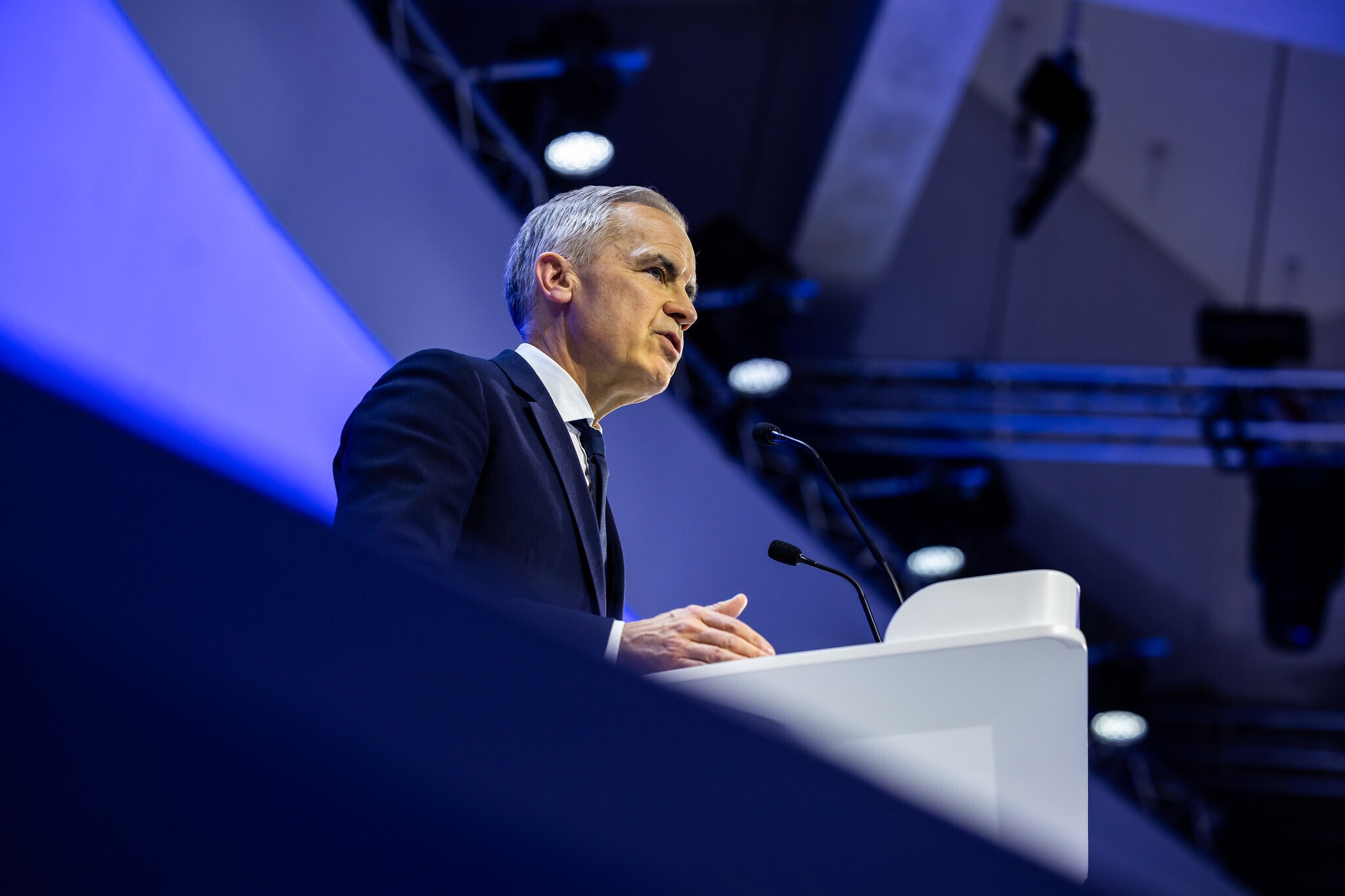
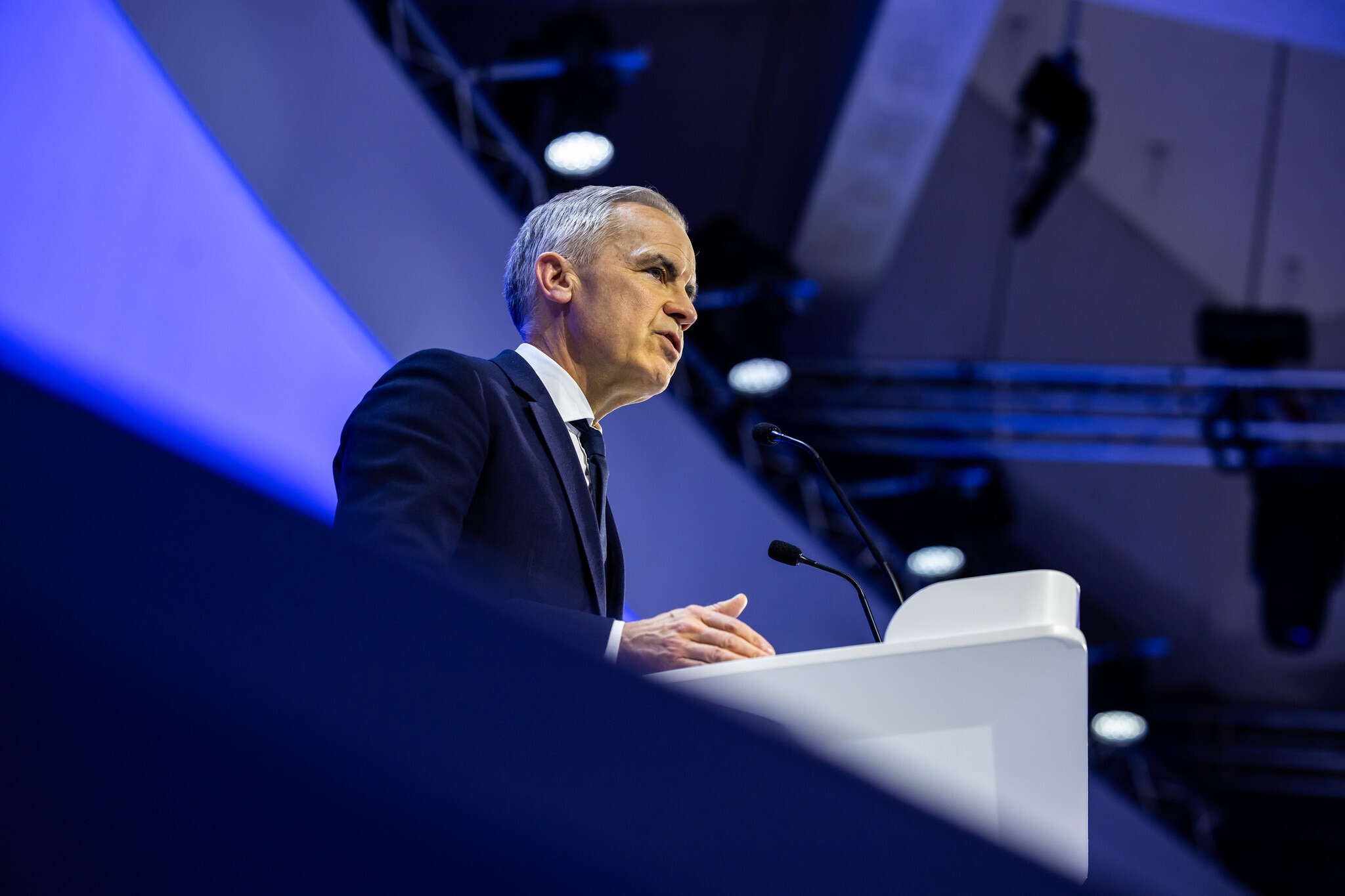
Mark Carney was speaking on day 2 of the World Economic Forum’s 56th Annual Meeting in Davos.
马克·卡尼在第56届达沃斯世界经济论坛年会第二天发表演讲。
- This blog contains the full transcript of a special address by Mark Carney, Prime Minister of Canada, delivered at the World Economic Forum’s Annual Meeting 2026 in Davos.
- 本博客英文部分是加拿大总理马克·卡尼在2026年达沃斯世界经济论坛年会上的专题演讲全文。
- Carney emphasized the end of the rules-based international order and outlined how Canada was adapting by building strategic autonomy while maintaining values like human rights and sovereignty.
- 卡尼强调了基于规则的国际秩序已经终结,并阐述了加拿大在坚守人权和主权等价值观的同时,通过建立战略自主权来适应新形势。
- The Canadian PM called for middle powers, such as his own, to work together to counter the rise of hard power and the great power rivalry, in order to build a more cooperative, resilient world.
- 加拿大总理呼吁中等国家携手合作,以应对硬实力的崛起和大国竞争,共同构建一个更加合作、更具韧性的世界。
This transcript was produced using AI and subsequently edited for style and clarity. The edits do not alter the substance of the speaker's remarks.
本演讲稿英文原文由AI生成,随后经过编辑以使格式和语言清晰连贯。这些编辑未改变演讲的实质内容。
Thank you very much, Larry. I’m going to start in French, and then I’ll switch back to English.
非常感谢您的介绍,拉里。我先用法语讲几句,然后再切换回英语。
[The following is translated from French]
[卡尼开始使用法语发言]
Thank you, Larry. It is both a pleasure, and a duty, to be with you tonight in this pivotal moment that Canada and the world going through.
谢谢您,拉里。今天,加拿大和世界各国都在经历关键转变,能与诸位相聚,我既感到荣幸,也感到责任重大。
Today I will talk about a rupture in the world order, the end of a pleasant fiction and the beginning of a harsh reality, where geopolitics, where the large, main power, geopolitics, is submitted to no limits, no constraints.
今天我想谈一谈世界秩序的断裂,一个美好虚构的终结和一个严酷现实的开始——在新的严酷现实里,大国的地缘政治博弈不再有任何限制和约束。
On the other hand, I would like to tell you that the other countries, especially intermediate powers like Canada, are not powerless. They have the capacity to build a new order that encompasses our values, such as respect for human rights, sustainable development, solidarity, sovereignty and territorial integrity of the various states.
另一方面,我想告诉大家,大国之外的其他国家,特别是像加拿大这样的中等国家,在这样的现实中并非无所作为。我们可以建立一个包含我们价值观的新秩序——尊重人权、可持续发展、团结互助、尊重各国主权及领土完整的新秩序。
The power of the less power starts with honesty.
敢于诚实面对现实,弱者才能强大。
[Carney returns to speaking in English]
[以下为卡尼转回英语演讲]
It seems that every day we’re reminded that we live in an era of great power rivalry, that the rules based order is fading, that the strong can do what they can, and the weak must suffer what they must.
每一天,好像都在提醒我们:现在是一个大国竞争的时代,基于规则的秩序正在消退,强者为所欲为,弱者只能忍受强加给自己的一切。
And this aphorism of Thucydides is presented as inevitable, as the natural logic of international relations reasserting itself.
“修昔底德陷阱”似乎在所难免,就像是国际关系天然的逻辑,不容置疑。
And faced with this logic, there is a strong tendency for countries to go along to get along, to accommodate, to avoid trouble, to hope that compliance will buy safety.
面对这样的逻辑,许多国家常常随波逐流、妥协退让,明哲保身,希望百依百顺能换来全身而退。
Well, it won’t.
可惜,没可能。
So, what are our options?
那,能怎么办呢?
In 1978, the Czech dissident Václav Havel, later president, wrote an essay called The Power of the Powerless, and in it, he asked a simple question: how did the communist system sustain itself?
1978年,捷克反对派人士瓦茨拉夫·哈维尔(后来成为捷克总统)写过一篇文章,《弱者的权力》。文章提出了一个简单的问题:共产主义制度是怎么维系的?
And his answer began with a greengrocer.
他的答案在一个蔬果店老板的故事里。
Every morning, this shopkeeper places a sign in his window: ‘Workers of the world unite’. He doesn’t believe it, no-one does, but he places a sign anyway to avoid trouble, to signal compliance, to get along. And because every shopkeeper on every street does the same, the system persist – not through violence alone, but through the participation of ordinary people in rituals they privately know to be false.
每天早上,这位店主都会在橱窗里贴上一张标语:“全世界无产阶级联合起来!”他自己并不相信这句话,也没人相信,但他还是照贴不误——免得又麻烦,为了显示服从,为了混口饭吃。正是因为每条街上的每个店主都这么做,那个体制才得以维系——不只是靠暴力,更靠普通老百姓参与服从的表演,做违心的事,讲违心的话。
Havel called this “living within a lie”.
哈维尔说,这是“谎言里的生活”。
The system’s power comes not from its truth, but from everyone’s willingness to perform as if it were true, and its fragility comes from the same source. When even one person stops performing, when the greengrocer removes his sign, the illusion begins to crack. Friends, it is time for companies and countries to take their signs down.
那个体制有权威,不是因为它拥有真实的权威,而是因为每个人都假装它有真实的权威,而它也正因此而十分脆弱。哪怕有一个人不再演戏,比如那个蔬果店老板撤掉标语,权威的幻象就会开始崩溃破灭。朋友们,千千万万的企业们,大大小小的国家们,撤下标语吧。
For decades, countries like Canada prospered under what we called the rules-based international order. We joined its institutions, we praised its principles, we benefited from its predictability. And because of that, we could pursue values-based foreign policies under its protection.
几十年来,像加拿大这样的国家,在所谓的“基于规则的国际秩序”下繁荣发展。我们加入了以它为基础各种国际机构,歌颂它赞美它,享受它的确定性给我们带来的好处。正因如此,我们才能在它的庇护下,推行基于价值观的外交政策。
We knew the story of the international rules-based order was partially false that the strongest would exempt themselves when convenient, that trade rules were enforced asymmetrically. And we knew that international law applied with varying rigour depending on the identity of the accused or the victim.
我们知道,所谓基于规则的国际秩序,本来就半真半假——因为强国还是想怎样就怎样,贸易规则执行起来厚此薄彼。我们也知道,国际法执行有松有紧,取决于被告是谁、受害者是谁。
This fiction was useful, and American hegemony, in particular, helped provide public goods, open sea lanes, a stable financial system, collective security and support for frameworks for resolving disputes.
这样的叙事以前很有用,而且美国霸权的确提供了一些公共产品——开放的海上航线、稳定的金融体系、集体安全机制,以及解决争端的框架。
So, we placed the sign in the window. We participated in the rituals, and we largely avoided calling out the gaps between rhetoric and reality.
于是我们在自家橱窗贴上了表衷心的标语。我们也开始参与服从的表演,尽量避免戳破表象与现实之间的窗户纸。
This bargain no longer works. Let me be direct. We are in the midst of a rupture, not a transition.
现在,这个服从换安稳的交易行不通了。坦白讲,我们眼前发生的是撕裂,而不是转变。
Over the past two decades, a series of crises in finance, health, energy and geopolitics have laid bare the risks of extreme global integration. But more recently, great powers have begun using economic integration as weapons, tariffs as leverage, financial infrastructure as coercion, supply chains as vulnerabilities to be exploited.
过去二十年,金融、卫生、能源、地缘政治,一场场危机接踵而至,把极度全球化的风险暴露无遗。而最近,大国开始把经济一体化当作武器,把关税当作筹码,用金融基础设施来胁迫,把供应链当作可以利用的弱点。
You cannot live within the lie of mutual benefit through integration, when integration becomes the source of your subordination.
如果经济一体化成了让你低头臣服的工具,你还怎么活在“互利共赢”的谎言里?
The multilateral institutions on which the middle powers have relied – the WTO, the UN, the COP – the architecture, the very architecture of collective problem solving are under threat. And as a result, many countries are drawing the same conclusions that they must develop greater strategic autonomy, in energy, food, critical minerals, in finance and supply chains.
世贸组织、联合国、气候大会,中等国家长久以来所依赖的多边机构,集体解决问题的整套架构,正受到威胁。结果就是,许多国家得出了同样的结论:在能源、粮食、关键矿产、金融和供应链等方面,必须有更大的战略自主权。
And this impulse is understandable. A country that can’t feed itself, fuel itself or defend itself, has few options. When the rules no longer protect you, you must protect yourself.
这样的想法可以理解。一个国家如果不能自给自足、不能自主供能、不能自我防卫,还能谈什么自主权?如果规则都不再保护你,那你就必须保护自己。
But let’s be clear eyed about where this leads.
但我们要看清楚,这条道路通向何方。
A world of fortresses will be poorer, more fragile and less sustainable. And there is another truth. If great powers abandon even the pretense of rules and values for the unhindered pursuit of their power and interests, the gains from transactionalism will become harder to replicate.
一个藩篱林立的世界,一定会越来越贫穷、脆弱、难以为继。还有另一个现实。如果大国连规则秩序和普世价值的表面功夫都懒得做,肆无忌惮地追逐权力和利益,那么单靠交易主义利益交换,想拿到好处也会越来越难。
Hegemons cannot continually monetize their relationships.
霸权国家不能总把盟友关系当作提款机。
Allies will diversify to hedge against uncertainty.
因为盟友一定会分散投资、对冲风险。
They’ll buy insurance, increase options in order to rebuild sovereignty – sovereignty that was once grounded in rules, but will increasingly be anchored in the ability to withstand pressure.
会买保险留后路,给自己多一些选择,以重建主权——原来,他们的主权建立在国际规则之上,但未来会越来越依靠抵御压力的韧性。
This room knows this is classic risk management. Risk management comes at a price, but that cost of strategic autonomy, of sovereignty can also be shared.
在座的各位应该很清楚,这就是风险管理。而风险管理就要付出成本,但战略自主权和主权付出的成本,是可以分摊的。
Collective investments in resilience are cheaper than everyone building their own fortresses. Shared standards reduce fragmentations. Complementarities are positive sum. And the question for middle powers like Canada is not whether to adapt to the new reality – we must. The question is whether we adapt by simply building higher walls, or whether we can do something more ambitious.
携手一致,共同增强韧性,远比各自为战、关门自守更具性价比。只要价值观一致,就不容易四分五裂。只要优势互补,就能一加一大于二。对于像加拿大这样的中等国家来说,问题不在于要不要适应新的现实——因为必须适应。真正的问题在于,适应的方式是高筑城墙消极防守,还是胸怀壮志主动出击。
Now Canada was amongst the first to hear the wake-up call, leading us to fundamentally shift our strategic posture.
加拿大是最早对这一趋势感到警觉的国家之一,这促使我们从根本上重新调整了战略姿态。
Canadians know that our old comfortable assumptions that our geography and alliance memberships automatically conferred prosperity and security – that assumption is no longer valid. And our new approach rests on what Alexander Stubb, the President of Finland, has termed “value-based realism”.
加拿大很清楚,以前,我们理所当然地认为,凭借地理优势和盟友身份,加拿大能自然而然地繁荣发展,得到安全保障,但这个假设现在不成立了。加拿大新的方针,归根结底,就是芬兰总统亚历山大·斯图布所说的“基于价值观的现实主义”。
Or, to put another way, we aim to be both principled and pragmatic – principled in our commitment to fundamental values, sovereignty, territorial integrity, the prohibition of the use of force, except when consistent with the UN Charter, and respect for human rights, and pragmatic and recognizing that progress is often incremental, that interests diverge, that not every partner will share all of our values.
换句话说,我们既要讲原则,也要讲务实——讲原则,是坚守核心价值观,捍卫主权和领土完整,禁止使用武力(除非符合《联合国宪章》),尊重人权;讲务实,是进步通常要循序渐进,各国利益分歧普遍存在,不是每个合作伙伴都认同我们所有的价值观。
So, we’re engaging broadly, strategically with open eyes. We actively take on the world as it is, not wait around for a world we wish to be.
于是,我们睁大眼睛,战略性地广泛接触。我们主动接受现实的世界,而不是束手坐等理想的世界降临。
We are calibrating our relationships, so their depth reflects our values, and we’re prioritizing broad engagement to maximize our influence, given and given the fluidity of the world at the moment, the risks that this poses and the stakes for what comes next.
我们正在调整外交关系,根据我们的价值观来决定关系的亲疏远近。同时,我们优先广泛接触,最大限度地扩大影响力,以应对当前世界局势的不确定性、其中蕴含的风险,以及未来的利害关系。
And we are no longer just relying on the strength of our values, but also the value of our strength.
我们也不再仅仅依赖价值观给我们的实力,还要依靠实力带来的价值。
We are building that strength at home.
我们正在建设这样的实力。
Since my government took office, we have cut taxes on incomes, on capital gains and business investment. We have removed all federal barriers to interprovincial trade. We are fast tracking a trillion dollars of investments in energy, AI, critical minerals, new trade corridors and beyond. We’re doubling our defence spending by the end of this decade, and we’re doing so in ways that build our domestic industries.
自我出任加拿大总理以来,我们削减了薪酬税、资本利得税和企业投资税。我们取消了所有联邦层面的省际贸易壁垒。我们正在快速推进总额达一万亿加元的投资,涵盖能源、人工智能、关键矿产、新贸易走廊等诸多领域。我们将在2030年之前将国防开支翻倍,而且会借此发展国内产业。
And we are rapidly diversifying abroad. We have agreed a comprehensive strategic partnership with the EU, including joining SAFE, the European defence procurement arrangements. We have signed 12 other trade and security deals on four continents in six months. The past few days, we’ve concluded new strategic partnerships with China and Qatar. We’re negotiating free trade pacts with India, ASEAN, Thailand, Philippines and Mercosur.
我们还在快速推进国际多元化布局。我们已与欧盟达成全面战略伙伴关系,比如加入欧洲防务采购安排(SAFE)。六个月内,我们在四大洲签署了一共12项贸易和安全协议。过去几天,我们与中国和卡塔尔达成了新的战略伙伴关系。我们正在与印度、东盟、泰国、菲律宾和南方共同市场谈判自由贸易协定。
We’re doing something else. To help solve global problems, we’re pursuing variable geometry, in other words, different coalitions for different issues based on common values and interests. So, on Ukraine, we’re a core member of the Coalition of the Willing and one of the largest per capita contributors to its defence and security.
不仅如此,为了助力解决全球问题,我们采用了“可变组合”的方式,也就是说,针对不同的议题,基于共同的价值观和利益,组建不同的联盟。比如在乌克兰问题上,我们是“志愿者联盟”的核心成员,按人均计算,我们是对乌克兰国防和安全贡献最大的国家之一。
On Arctic sovereignty, we stand firmly with Greenland and Denmark, and fully support their unique right to determine Greenland’s future.
在北极国家主权问题上,我们坚定地与格陵兰和丹麦站在一起,全力支持他们决定格陵兰未来的固有权利。
Our commitment to NATO’s Article 5 is unwavering, so we’re working with our NATO allies, including the Nordic Baltic Gate, to further secure the alliance’s northern and western flanks, including through Canada’s unprecedented investments in over-the-horizon radar, in submarines, in aircraft and boots on the ground, boots on the ice.
我们对北约第五条“集体防御”条款的承诺坚定不移,因此我们正在与北约盟友合作,包括北欧波罗的海门户国家,进一步保卫北约的北翼和西翼安全,具体措施包括加拿大在超视距雷达、潜艇、飞机以及地面部队,包括在冰原上的部署,都做了史无前例的大规模投资。
Canada strongly opposes tariffs over Greenland and calls for focused talks to achieve our shared objectives of security and prosperity in the Arctic.
加拿大坚决反对对格陵兰征收关税,并呼吁进行有针对性的对话,实现北极地区安全与繁荣的共同目标。
On plurilateral trade, we’re championing efforts to build a bridge between the Trans Pacific Partnership and the European Union, which would create a new trading bloc of 1.5 billion people. On critical minerals, we’re forming buyers’ clubs anchored in the G7 so the world can diversify away from concentrated supply. And on AI, we’re cooperating with like-minded democracies to ensure that we won’t ultimately be forced to choose between hegemons and hyper-scalers.
在多边贸易方面,我们正在打通跨太平洋伙伴关系协定(TPP)与欧盟之间的桥梁,这将创建一个拥有15亿人口的新贸易版图。在关键矿产方面,我们正在组建以七国集团为核心的采购联盟,让世界摆脱对集中供应的依赖。在人工智能方面,我们正在与志同道合的民主国家合作,确保我们不用在霸权国家之间和超大规模科技公司之间被迫选边站。
This is not naive multilateralism, nor is it relying on their institutions. It’s building coalitions that work – issues by issue, with partners who share enough common ground to act together.
这不是天真的多边主义,也没有依赖现有的国际机构。而是建立行得通的联盟——能针对具体问题,与有足够共识的伙伴共同行动。
In some cases, this will be the vast majority of nations.
在某些情况下,绝大多数国家都会参与其中。
What it’s doing is creating a dense web of connections across trade, investment, culture, on which we can draw for future challenges and opportunities.
这样做是在贸易、投资、文化等领域编织一张密集的关系网,在未来的挑战和机遇中,可以为我们所用。
Argue, the middle powers must act together, because if we’re not at the table, we’re on the menu.
我认为,中等国家必须团结行动,因为如果我们不上桌话事,就会上桌任人宰割。
But I’d also say that great powers, great powers can afford for now to go it alone. They have the market size, the military capacity and the leverage to dictate terms. Middle powers do not.
但我也要说,大国,大国目前有本钱一意孤行。它们拥有市场规模、军事实力和主导谈判的筹码。可中等国家不具备这些条件。
But when we only negotiate bilaterally with a hegemon, we negotiate from weakness. We accept what’s offered. We compete with each other to be the most accommodating.
如果我们与霸权国家只进行双边谈判,我们就是从弱势地位谈判。我们只能接受对方开出的条件。中等国家之间只会彼此竞争,看谁更迎合霸权。
This is not sovereignty. It’s the performance of sovereignty while accepting subordination. In a world of great power rivalry, the countries in between have a choice – compete with each other for favour, or to combine to create a third path with impact.
这可不算有主权。这是在假装有主权,实则是低头甘做藩属国。在大国竞争的世界里,夹在中间的国家要做出选择——要么相互竞争以博取大国青睐,要么联合起来开辟一条有影响力的第三条道路。
We shouldn’t allow the rise of hard power to blind us to the fact that the power of legitimacy, integrity and rules will remain strong, if we choose to wield them together – which brings me back to Havel.
我们不能让硬实力的崛起蒙蔽双眼,要看到正当合法、诚信和规则的力量依然强大——只要我们愿意共同运用这些力量。说到这里,让我回到哈维尔的故事。
What does it mean for middle powers to live the truth?
对于中等国家来说,“活得真实”意味着什么?
First, it means naming reality. Stop invoking rules-based international order as though it still functions as advertised. Call it what it is – a system of intensifying great power rivalry, where the most powerful pursue their interests, using economic integration as coercion.
首先,就是要直面现实。别再提什么基于规则的国际秩序了,难道它还能像宣称的那样运转下去吗?归根结底,现实就是大国竞争日益激烈,最强大的国家为了追逐自身利益,把经济一体化当作施压的工具。
It means acting consistently, applying the same standards to allies and rivals. When middle powers criticize economic intimidation from one direction, but stay silent when it comes from another, we are keeping the sign in the window.
还有就是,我们要言行一致,对盟友和对手要采用同样的标准。如果中等国家批评来自一方的经济胁迫,却对另一方同样的胁迫行为保持沉默,那我们就是在橱窗里挂标语牌。
It means building what we claim to believe in, rather than waiting for the old order to be restored. It means creating institutions and agreements that function as described. And it means reducing the leverage that enables coercion – that’s building a strong domestic economy. It should be every government’s immediate priority.
我们还需要建设我们推崇和信仰的体系,而不是坐等旧秩序得到修复。我们要创建名副其实的机制和协议。我们要削弱施压手段的筹码——也就是建设强大的国内经济。这应该是各国政府当下的首要任务。
And diversification internationally is not just economic prudence, it’s a material foundation for honest foreign policy, because countries earn the right to principled stands by reducing their vulnerability to retaliation.
在国际上实现多元化,不仅是经济上的审慎之举,更是诚实外交政策的根本基础,因为只有面对报复时不那么脆弱不堪,一个国家才有资格坚持原则立场。
So Canada. Canada has what the world wants. We are an energy superpower. We hold vast reserves of critical minerals. We have the most educated population in the world. Our pension funds are amongst the world’s largest and most sophisticated investors. In other words, we have capital, talent… we also have a government with immense fiscal capacity to act decisively. And we have the values to which many others aspire.
那么,说到加拿大。世界想要的,加拿大全都有。我们是能源超级大国。我们拥有庞大的关键矿产储备。我们的国民受教育程度全球最高。我们的养老基金是世界上规模最大、最成熟的投资者之一。换句话说,我们有资本、有人才……我们还有一个财政实力雄厚、能够果断行动的政府。而且我们拥有许多国家向往的价值观。
Canada is a pluralistic society that works. Our public square is loud, diverse and free. Canadians remain committed to sustainability. We are a stable and reliable partner in a world that is anything but.. A partner that builds and values relationships for the long term.
加拿大有行之有效的多元社会。我们的公共广场热闹、多样且自由。加拿大人始终致力于可持续发展。在一个动荡不安的世界里,我们是稳定可靠的伙伴……是一个着眼长远、缔造并珍视伙伴关系的国家。
And we have something else. We have a recognition of what’s happening and a determination to act accordingly. We understand that this rupture calls for more than adaptation. It calls for honesty about the world as it is.
我们还有别的优势。我们对当前的形势和发展有清醒的认识,并决心对此采取行动。我们明白,现在的撕裂,需要的不仅仅是适应,还需要我们诚实面对这个世界的真实面貌。
We are taking the sign out of the window. We know the old order is not coming back. We shouldn’t mourn it. Nostalgia is not a strategy, but we believe that from the fracture, we can build something bigger, better, stronger, more just. This is the task of the middle powers, the countries that have the most to lose from a world of fortresses and most to gain from genuine cooperation.
加拿大要撤掉橱窗里的标语。我们知道旧秩序一去不复返了。我们不该为此哀悼。怀旧不是战略,但我们相信,从这场撕裂中,我们能建设一个更大、更好、更强、更公正的体系。这是中等国家的使命,在堡垒林立的世界里,我们的损失最大;而在真诚合作的世界里,我们获益也最多。
The powerful have their power.
强者也有自己的权力。
But we have something too – the capacity to stop pretending, to name reality, to build our strength at home and to act together.
除了权力,我们还有不再自欺欺人的能力,能直面现实,能在国内壮大实力,并携手共进。
That is Canada’s path. We choose it openly and confidently, and it is a path wide open to any country willing to take it with us. Thank you very much.
这就是加拿大的道路。我们公开而自信地选择这条道路,这条道路也向任何愿意与我们同行的国家敞开。非常感谢。
Loading...