By Stephen M. Walt, a columnist at Foreign Policy and the Robert and Renée Belfer professor of international relations at Harvard University.
作者:芬·M·沃尔特,美国《外交政策》杂志专栏作者,哈佛大学罗伯特与蕾妮·贝尔弗国际关系中心教授。
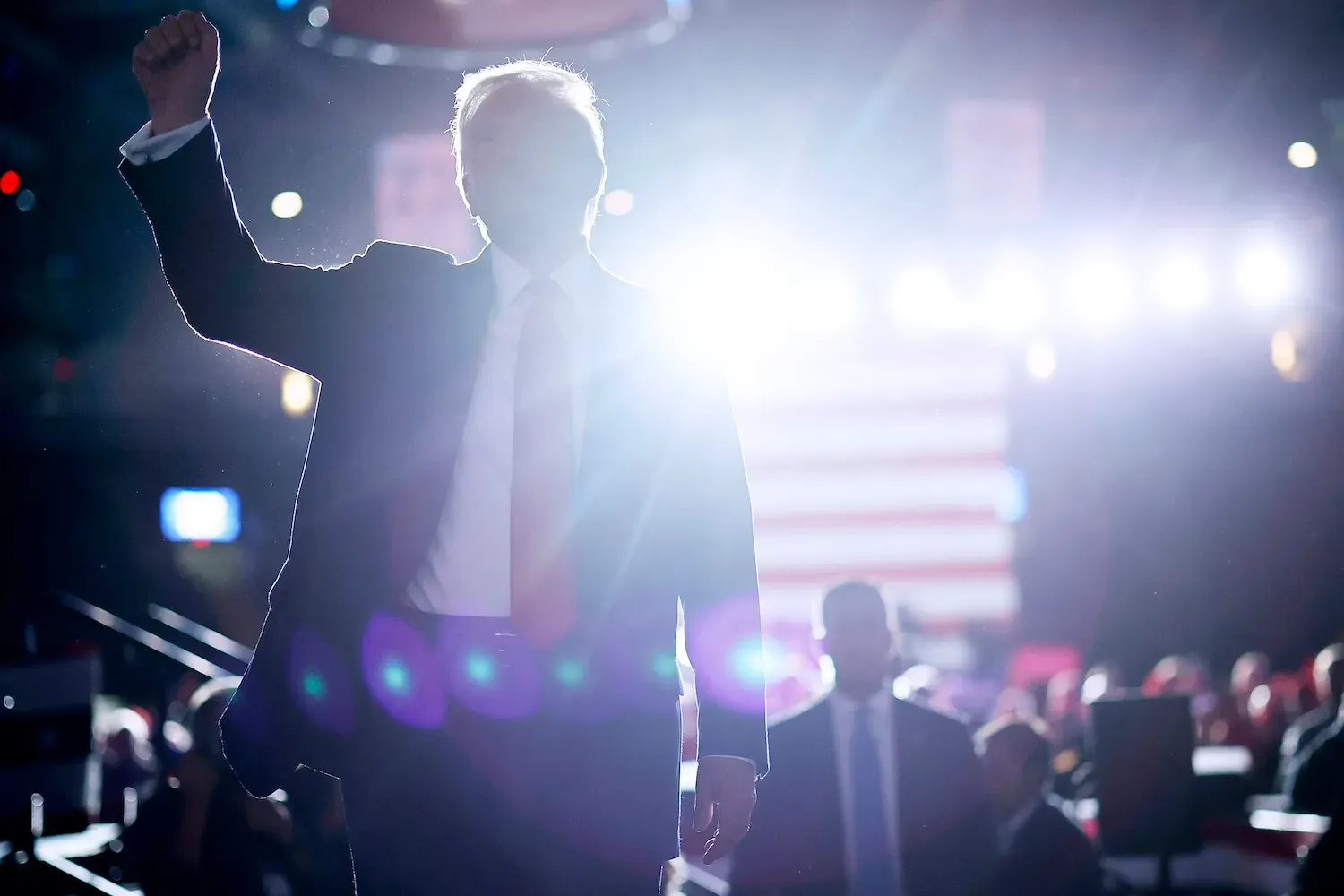
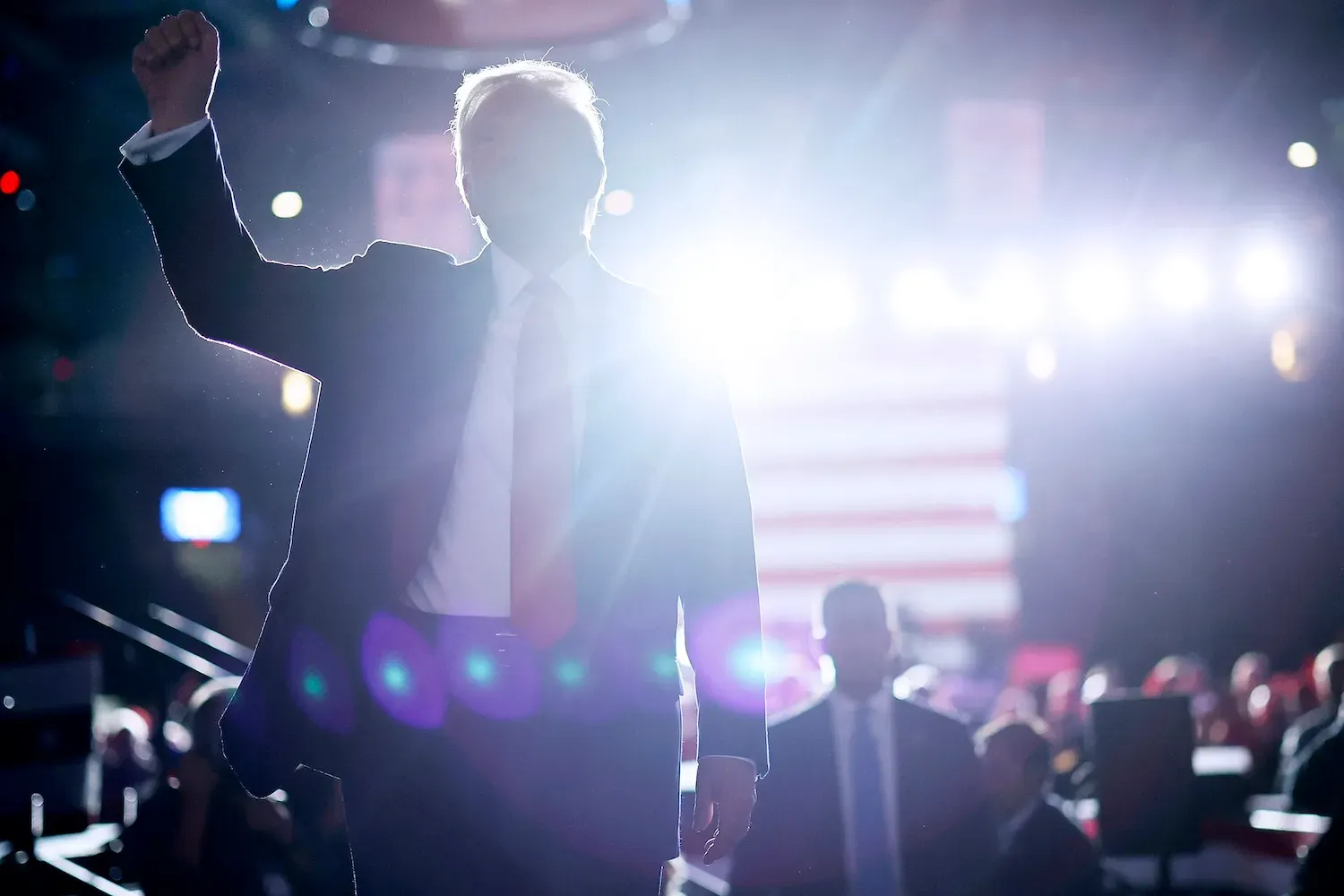
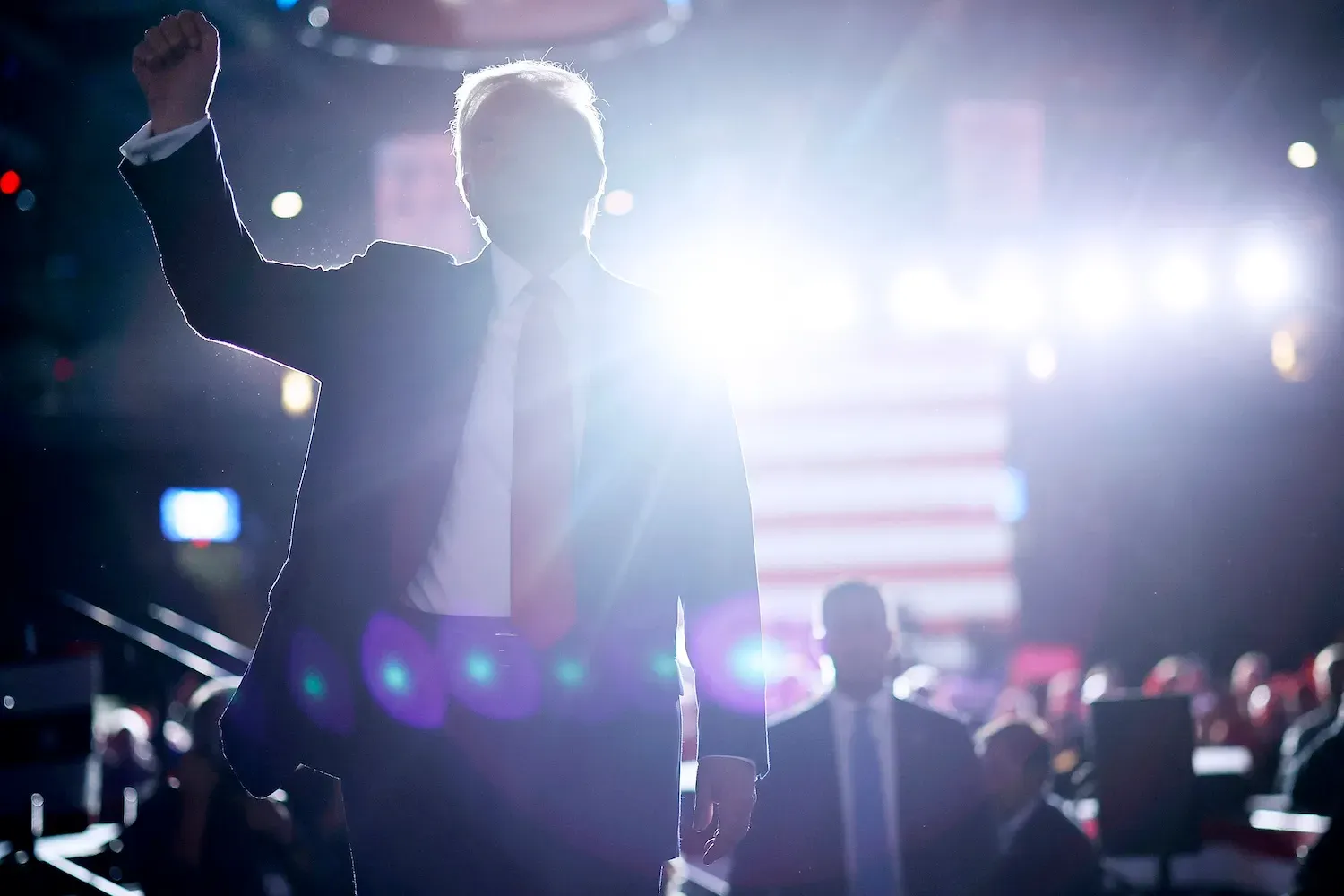
Republican presidential nominee and former President Donald Trump pumps his fist as he walks off stage at the end of a campaign rally at the Santander Arena on Nov. 4, 2024, in Reading, Pennsylvania.
2024 年 11 月 4 日,特朗普在宾夕法尼亚州雷丁市桑坦德体育馆的举行竞选集会,结束演讲退场时,挥拳致意。
May 4, 2026
One of the more striking features of the Trump administration’s approach to foreign policy—not the chosen ends, but its preferred means—is its absolute confidence in America’s hard power and its near-total disdain for what my late colleague Joseph Nye called “soft power.” Nye defined the latter as “the power of attraction,” as a nation’s ability to get others to do what it wanted because it possessed qualities that made others want to emulate it, associate with it, and follow its lead. States with a lot of hard power could compel others through force and intimidation or by offering aid or protection; states with an abundance of soft power enjoyed greater influence because others wanted to be like them, agreed with the principles they stood for, or viewed them as fashionable, successful, and even “hip.”
我的同事、已故的约瑟夫·奈(Joseph Nye)认为,一个国家的软实力,就是它对外的“吸引力”。一个国家之所以能让别的国家按它的意愿行事,不是靠逼迫,而是因为别的国家愿意效仿它、靠拢它、跟随它。硬实力强大的国家,可以用武力恐吓逼迫他国就范,也可以靠提供援助和保护伞换取配合;而软实力充沛的国家,往往影响力更大,因为别的国家想成为它,认同它所代表的原则,或者觉得它代表了历史前进的方向、是成功的典范,甚至可以说“很潮”。特朗普政府处理外交政策时,就有个格外鲜明的特点,不论目的是什么,手段都一致强硬,对美国的硬实力盲目自信,对“软实力”又几乎毫不在乎。
A good realist like me is hardly going to denigrate the importance of hard power; on the contrary, it’s hard to have lots of soft power without substantial hard power to back it up. But you can have plenty of hard power and little or no soft power, as Vladimir Putin’s Russia has shown. Ideally, a state would like to have a lot of both, because having a lot of soft power means others will be naturally inclined to do what you want and you won’t have to use your hard power very often. Nye believed America’s combination of hard and soft power gave it enormous advantages when dealing with the outside world, which is one of the reasons he was optimistic about America’s future and skeptical of those predicting its decline. Yet by the end of his long career, even he had begun to worry about what was happening to America’s global appeal.
Under Trump 2.0, the belief that hard power is all you need is abundantly apparent. The administration used the threat of tariffs to force trading partners into one-sided economic agreements, and it vows to continue the effort despite the Supreme Court decision that strikes them down. The administration has used military force in more than half a dozen countries and continues to kill alleged drug smugglers in the Caribbean and the Pacific Ocean, even when it doesn’t know who they are, cannot prove all of them are in fact engaged in narcotics trafficking, and admits that these actions will have little or no effect on the availability of illegal drugs. President Donald Trump has repeatedly accused other world leaders of being weak, told Ukrainian President Volodymyr Zelensky that he didn’t “have the cards” and should therefore cut a deal with Russia, and imposed a blockade on Cuba intended to further immiserate ordinary Cubans and eventually force its regime to surrender. Last but by no means least, it abandoned diplomacy and launched an unnecessary and unprovoked war against Iran, on the mistaken assumption that the Iranian regime would quickly collapse and yield a government more to our liking.
“特朗普 2.0”时代,笃信“够硬就能赢”几乎是明晃晃地写在脸上。特朗普政府把关税威胁当竹杠,逼迫贸易伙伴签下对美方“单边让利”的经济协议;即便最高法院裁定特朗普关税政策违宪,特朗普政府也表示要继续推进(译注)。特朗普政府还在至少六个国家动用军事力量,在加勒比海与太平洋海域持续击杀所谓“毒贩”,却连对方是谁都不清楚,也拿不出证据证明这些人真的在贩毒,甚至承认这些行动对毒品供给几乎没有任何影响。特朗普一再指责别国领导人“软弱无能”,说乌克兰总统泽连斯基“手里没牌”,所以应该同俄罗斯达成协议;又对古巴实施封锁,希望古巴老百姓的日子更艰难,以此逼迫古巴政权就范。最后也是最关键的一点:特朗普政府彻底抛弃外交,对伊朗发动了一场既没必要、也毫无正当理由的战争。特朗普误以为,伊朗政权肯定会亡不旋踵,迅速垮台,并产生一个亲美政府。
译注:2026年2月20日,美国最高法院以6比3的投票结果裁定特朗普政府征收大规模关税违宪。首席大法官罗伯茨在多数派意见书中强调,宪法明确将征收“税、关税、进口税与国内消费税”的权力赋予国会,总统行使此项权力必须获得国会的明确授权。此次裁决推翻了特朗普政府近70%的关税政策,包括对全球征收的“对等关税”,以及针对中国、加拿大和墨西哥征收的“芬太尼”关税。特朗普在社交媒体上抨击最高法院多数派大法官“不爱国,不忠于我们的宪法”,并对所有进口至美国的商品征收10%的全球关税,随后又将税率上调至15%。但这项新关税受时间限制,最长期限为150天,将于2026年7月24日到期,除非获得国会授权延长。
What is most striking about this fixation with hard power is how little effort is being made to disguise, legitimize, or justify its use. Most countries do nasty things on occasion, and great powers do so more than most, but they usually try to find ways to hide the mailed fist in a velvet glove of normative justification. Not so the Trump administration, which seems positively gleeful whenever it is able to violate some established norm and inflict some pain. When the president threatens to eradicate Iranian civilization, or when the secretary of defense dismisses international law and boasts that U.S. troops will show opponents “no quarter” (which would constitute a war crime), it is clear their goal is to intimidate rather than persuade, to compel rather than attract. Their motto, it seems, is: “Being the strongest means never having to say you’re sorry.”
最令人咋舌的是:这种对硬实力的迷恋,甚至都懒得遮掩、粉饰和辩解。大多数国家,偶尔也会干些不体面的事,大国强国更是如此,但它们通常会给自己找个“正当性”的理由,“把铁拳藏在天鹅绒手套里”。可特朗普政府不一样:每次突破既定规则、让别人吃点苦头,他们都洋洋得意、乐在其中。特朗普总统扬言要“把伊朗文明抹去”的时候,美国国防部长公然无视国际法、鼓吹美军要将对手“赶尽杀绝”的时候(这可是战争罪),都清楚表明,他们的目标是恐吓,是胁迫,而不是协商,更不是循循善诱。他们的座右铭大概是:“只要最强大,就永远不需要说对不起。”
This veneration of hard power has been accompanied by systematic efforts to undermine the institutions and policies that once made the United States more attractive to others. The U.S. Agency for International Development was abruptly dismantled by Elon Musk and the DOGE effort, endangering the lives of millions of people around the world and making the United States look arbitrary and indifferent. The administration tried to shut down the Voice of America broadcast network, an effort that was blocked in court and by a rare moment of congressional opposition. U.S. Secretary of State Marco Rubio has withdrawn the United States from more than 60 international organizations, allowed dozens of diplomatic posts to sit empty, and left the U.S. unrepresented at key international summit meetings. Violent Immigration and Customs Enforcement raids and the killing of innocent protesters have exposed an ugly side of America to the rest of the world, and a sustained assault on higher education—previously one of the most visible symbols of American prestige and soft power—has made U.S. colleges and universities less attractive destinations for foreign students. Not only do these actions hit academia’s bottom line (which may be the point), it also means fewer foreign students will be educated in the United States, an experience that usually makes them even more “pro-America” than when they arrived. Put these things together, and you can understand why China’s image around the world is rising while America’s is falling.
崇尚硬实力至上的同时,特朗普政府正在系统性地削弱那些曾经让美国散发光芒的制度和政策。比如,埃隆·马斯克和所谓 DOGE 部突然解散美国国际开发署(USAID),不仅让全球数百万人的生命陷入危机,也让美国看起来十分任性、冷漠、不管不顾。特朗普政府还想关停“美国之音”广播,后来在法院和少有的国会反对中被叫停。国务卿鲁比奥更是带着美国退出了 60 多个国际组织,留着几十个外交职位长期空缺,在关键国际峰会上干脆缺席。与此同时,移民与海关执法局(ICE)的暴力搜查、对无辜抗议者血腥杀戮,把美国阴暗的一面暴露给了全世界;特朗普政府还对高等教育持续打压,美国高校曾是美国威望与软实力最醒目的招牌,现在美国高校对留学生而言变得不再那么令人向往。这些做法不仅会减少教育界的收入盈利(也许这就是他们的目的),更意味着未来在美国接受教育的留学生会减少;而留美经历本来能让他们更“亲美”。把以上的做法放在一起看,就不难理解:为什么中国在全球的形象在改善上升,而美国的形象却在恶化。
I’m hardly the first person to notice the administration’s systemic assault on America’s soft-power advantage; what’s puzzling is why administration officials don’t recognize what’s happening. Do they not understand that over-reliance on hard power—and treating the use of military force to hurt other countries not as a rare and regrettable necessity but as an act to be celebrated—is going to make other countries less willing to work with an erratic, vengeful, and potentially threatening America? Haven’t they ever heard the old adage that “you can catch more flies with honey than with vinegar”?
特朗普政府对美国软实力优势的系统性打击,当然不是我才发现的。之所以让人费解,是想不通为什么美国官员意识不到自己在做什么。他们难道不明白吗?动用武力伤害他国不是什么“值得庆祝的壮举”,而应该是“迫不得已、退无可退的最后手段”。一味依赖硬实力,只会让美国成为反复无常、睚眦必报、咄咄逼人的美国,别的国家不会乐意与这样的美国合作。他们难道没听过那句老话吗?“招蜂引蝶,得用蜂蜜,别用大便”。
Here’s what I think is going on.
我觉得事实真相大概是这样。
First, from the president on down, the administration’s weltanschauung divides the world into the strong (“winners”) and the weak (“losers”) and views any sort of compromise with weaker parties as a failure. Hence the tendency to preen and posture and adopt a take-no-prisoners attitude toward even the mildest criticism or opposition, not to mention the mindless attacks on staunchly pro-American countries such as Canada or Denmark. Defense Secretary Pete Hegseth’s macho muscle-flexing about the “warrior ethos” and the joys of “lethality,” and White House advisor Stephen Miller’s declaration that the “iron laws” of history justified dominance by the strong, are perhaps the most obvious examples of this perspective, but they are hardly alone in believing that powerful actors can just tell others what to do and expect them to comply. Remember: They were appointed by a president who bragged that being a star made it OK to molest women. In this (im)moral universe, rules are for other people.
从总统到基层,特朗普班子的世界观大致就是把世界一刀切成两类:强者是“赢家”,弱者是“输家”,而跟弱者做任何妥协,都等于认输。于是,他们摆谱、作势,对哪怕最温和的批评和反对都摆出“绝不留情”“赶尽杀绝”的姿态,就算对加拿大、丹麦这类一向亲美的国家,也照样不管不顾、不留情面。显而易见的例子有很多,比如:美国国防部长赫格塞思标榜“硬汉”气概,动不动就吹捧“勇武精神”,陶醉于“致命杀伤”的快感;白宫顾问米勒则宣称历史自有“铁律”,强者就该支配弱者。除了他们两个,特朗普政府里还有很多人相信“谁的拳头大,就该听谁的”,毕竟是同一位总统任命的官员。特朗普还吹嘘说,既然是明星,猥亵女性又有什么关系。在这样的(不)道德观里,规则永远是用来约束别人的。
Second, although Trump and his followers claim to be intensely patriotic, they don’t seem to like the country they are trying to lead. Consider the MAGA slogan: If you believe it’s necessary to make America great again, you must not think it’s great today. For all their symbolic flag waving, it’s remarkable how few things Trump and his minions like or admire about this country. They don’t like most of the media; they despise most popular entertainers; they loathe Democrats (who are a larger share of the population than Republicans); they don’t like checks and balances or the rule of law; they are suspicious of citizens who weren’t born here (along with some who were); they have little respect for science and think universities are the enemy; and they remain convinced that a shadowy “deep state” still infects the military, the diplomatic corps, and a lot of government agencies. Trump doesn’t even like the White House and wants to remake it into a gaudy imperial monument. Because they believe America is in terrible shape, they may find it hard to imagine that the country’s enduring features might be attractive to others.
其次,虽然特朗普和他的追随者嘴上说自己“爱国爱得不行”,可显而易见,他们并不喜欢自己正在治理的这个国家。想想 MAGA 那句口号:如果你觉得美国需要“再次伟大”,那就说明在你眼里,美国并不伟大。虽然旗子挥得震天响,但特朗普和他的党羽对这个国家几乎没多少发自肺腑的欣赏,这十分耐人寻味。他们厌恶大多数美国媒体;瞧不起大部分美国流行艺人;痛恨民主党人(可民主党人在美国人口中占比超过共和党);不喜欢美国的权力制衡机制,也不喜欢法治;对非本土出生的美国公民疑神疑鬼(连一些在美国出生的也不放过);不尊重科学,觉得高校是敌人;还坚信有个躲在幕后的“深层政府”,在军队、外交系统和政府机构里作祟。特朗普甚至连白宫都不喜欢,想把它改造成俗艳的帝王纪念碑。因为他们深信,现在的美国已经烂得不成样子,所以他们无法理解,美国悠久的优秀品质,对其他人有什么吸引力。
Third, Trump and his followers like quick fixes that they can portray as real achievements (e.g., the administration’s bogus peace agreements, interim trade deals, etc.) while eschewing patient, long-term efforts to win support overseas. Trump and company are more interested in cutting deals with other leaders than in nurturing positive ties between peoples, where the benefits accrue gradually and may not be fully realized until after they’ve left office. Who cares about winning over the next generation of foreign students when you will be out of office after 2028?
第三,特朗普和他的追随者对速胜非常迷恋,而且最好是能包装成真实功绩,给他们吹嘘炫耀的速胜(比如特朗普政府的假和平协议、临时贸易协议之类)。但是,他们不愿意做哪些需要长期投入、耐心赢得海外支持的工作。特朗普和他的帮众,热衷于与他国领导人“达成交易”,而不是经营两国人民之间更积极、更牢固的联系。毕竟,后者的收益要一点点累积,往往要等特朗普下台以后才能显现。反正 2028 年,他就走人了,他才不在乎能不能“争取”到下一代留学生来美国呢。
If this was your world view, then you would also discount the importance of soft power and lean on hard power instead. But Americans should know better. Some of the greatest successes in U.S. foreign-policy history came from working constructively and generously with others—including some former adversaries—and by working to correct some of the less savory aspects of our own society in order to burnish our global image. Examples include the Marshall Plan, NATO, the Civil Rights Movement, the measured promotion of trade liberalization, and the hard-nosed but ultimately peaceful negotiations that ended the Cold War and reunified Germany. By contrast, some of America’s biggest foreign-policy failures (e.g., Vietnam, the forever wars in Iraq and Afghanistan, the ouster of Muammar al-Qaddafi in Libya, or the current debacle in Iran) came from thinking that sufficient hard power would guarantee success.
如果认同这种世界观,那自然不会把软实力放在眼里,而会把重心放在硬实力上。但美国人不该这么肤浅:美国外交史上最成功的时刻,一是因为美国与他国开展了建设性、利他性地合作,有时候对方还是曾经的对手,也因为美国能直面和改善国内社会的阴暗和落后,让美国在世界面前树立起良好形象。比如马歇尔计划、北约、民权运动、稳健推进贸易自由化,还坚强地和平终结冷战和实现德国统一,都还历历在目。反过来,美国最惨痛的外交失败,几乎都源于同一种误判:以为只要硬实力够强,就一定能赢,比如越战,在伊拉克和阿富汗陷入的“无尽战争”,在利比亚推翻卡扎菲政府,以及如今在伊朗的烂摊子。
The United States still has many appealing qualities, and foreign governments and citizens have been able to distinguish between America as a country and an ideal and the actions of its worst leaders. But if American political life continues to become coarser and more corrupt, and its hard power is repeatedly misused while its soft power atrophies, keeping those two things separate is going to be a lot more difficult.
如今的美国,依然有不少让人向往的地方。外国政府和老百姓还是分得清,不会认为美国最差领导人的决策和行动能代表“美国”这个国家和美国所倡导的理念。但是,如果美国的政治生态继续恶化腐败;如果硬实力一次次被滥用、而软实力日渐萎缩,那么,要把这两件事区分开来,就会越来越难。
Loading...